To guide you through your next steps, this page will help you understand what UNV is all about, how to identify the right volunteer assignment for you, and how to apply through the Unified Volunteering Platform (UVP).
As you explore volunteering opportunities with UNV, it is helpful to first understand the role of UN Volunteers within the United Nations system and the impact volunteerism has in supporting peace and development worldwide.
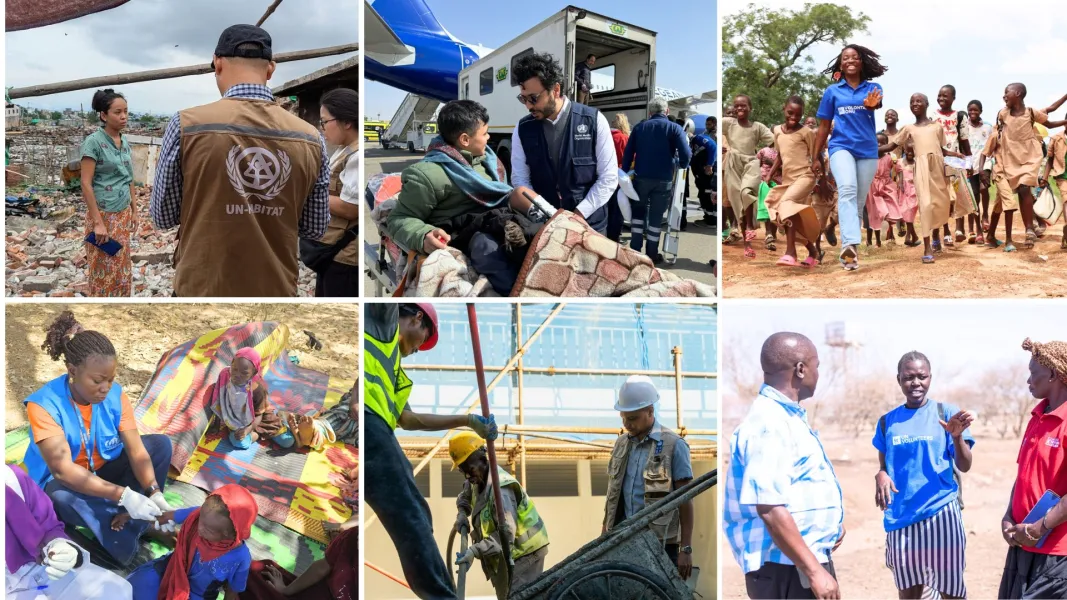
UN Volunteers contribute their time, skills, and experience to support the work of UN agencies, funds, and programmes in over 160 countries. Through their assignments, volunteers help strengthen local capacities, promote sustainable development, and bring the spirit of volunteerism into UN operations.
To learn more about the UNV programme, its mission, and how volunteers contribute to the work of the United Nations, we recommend exploring the following course:
Learn even more about UNV
To learn even more about UNV, the learning offer for UN Volunteers, and tips on crafting your profile, take a look at this presentation and webinar recording.
Introduction to UNV & the Learning Offer
Webinar recording
Presentation: Introduction to UNV & the Learning Offer (PDF)
Volunteer Stories
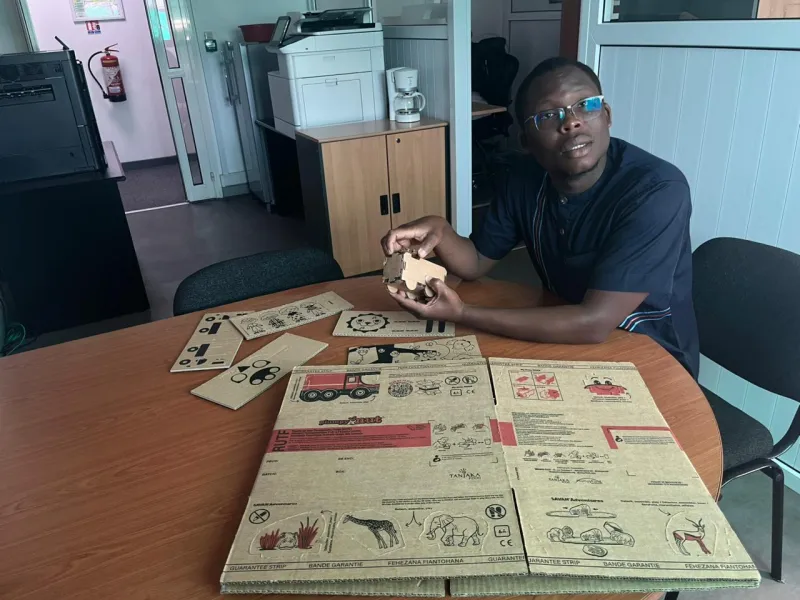
Hear from UN Volunteers about their experiences and the impact of their work:
When browsing volunteer opportunities on UVP, you will find assignments described in Descriptions of Assignment (DOAs). Understanding how these assignments are structured will help you identify the opportunities that best match your skills, experience, and availability.
Below are the key elements that define UN Volunteer assignments.
Tip: To display only those DOAs that match your expertise and preferred assignment arrangements, you can use the filters on UVP.

Step 1: Type — International vs. National
UN Volunteer assignments are divided into two main types:
| Type | Description |
|---|---|
| International UN Volunteer | Serves in a country other than their country of nationality, as specified in the Description of Assignment. |
| National UN Volunteer | Serves in their own country of nationality or legal residence, where the duty station is located. |
Step 2: Category — Community, Associate, Specialist, Expert
Within each type, assignments are grouped into four categories. These categories reflect the level of responsibility, required experience, and qualifications.
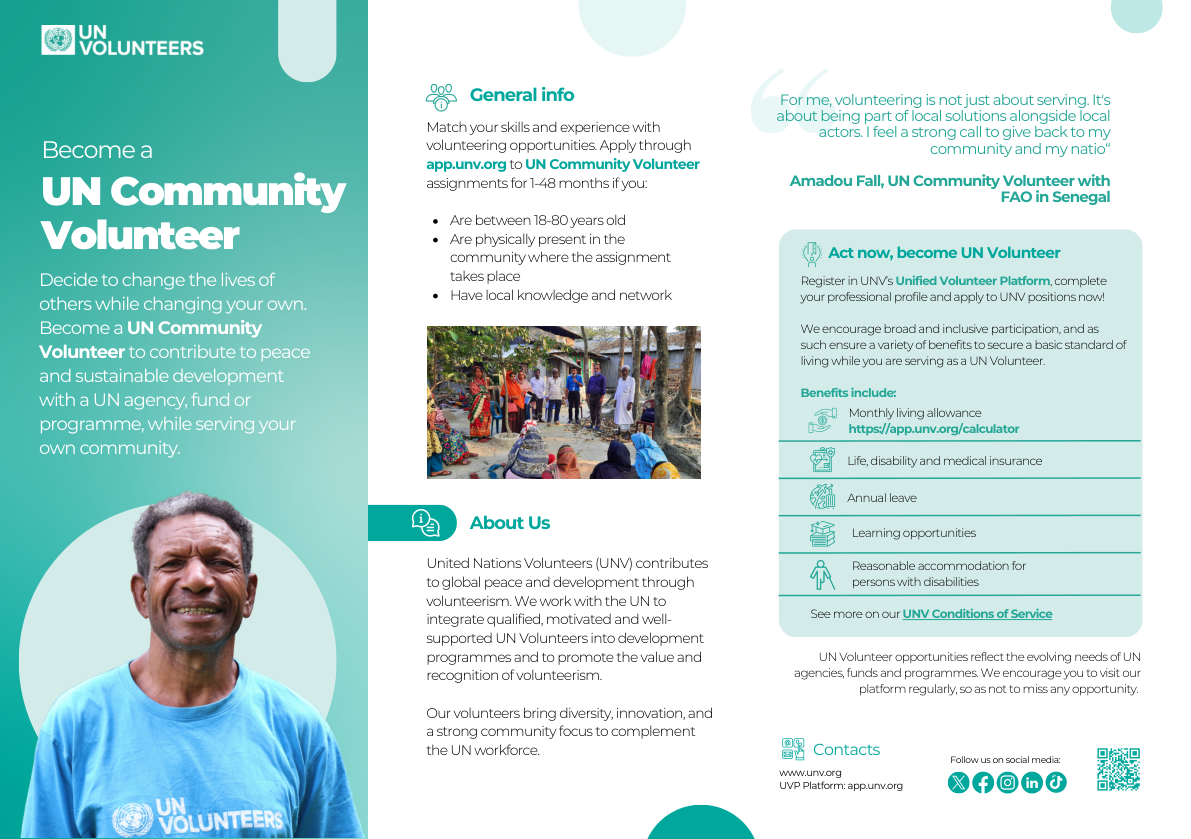
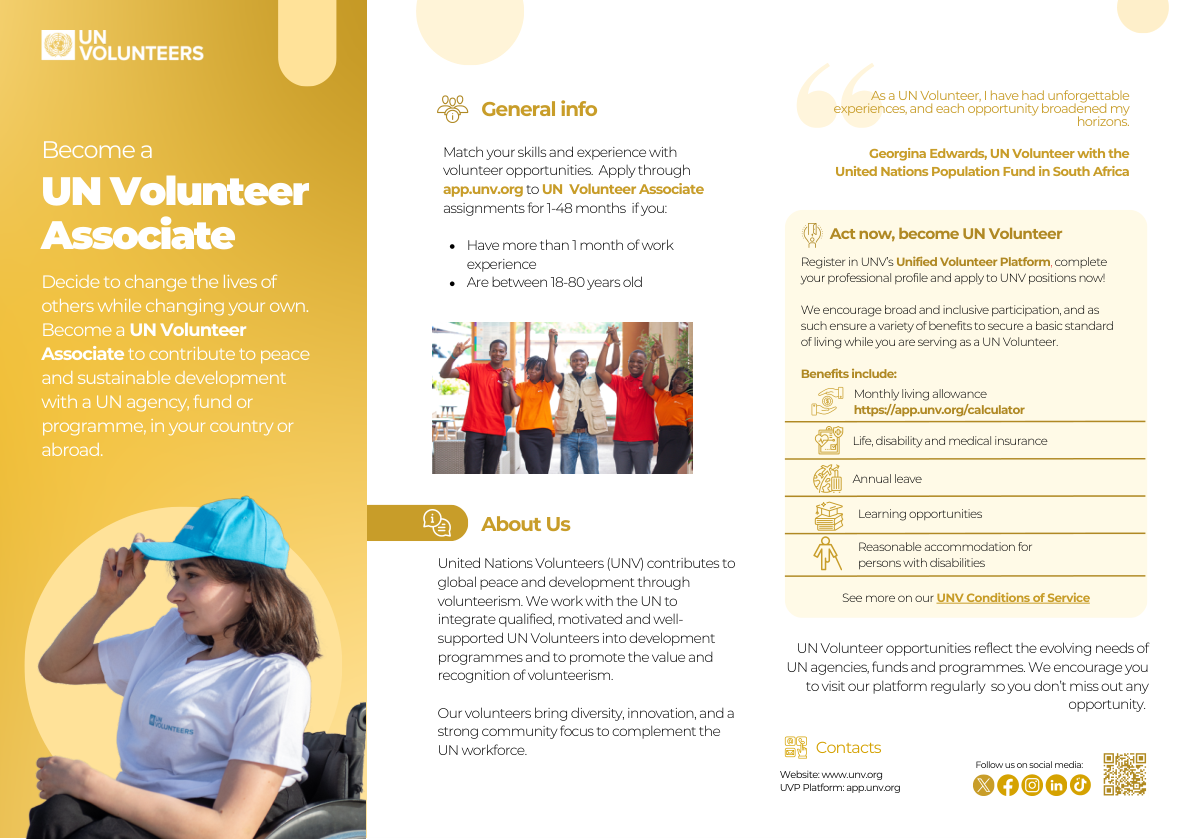
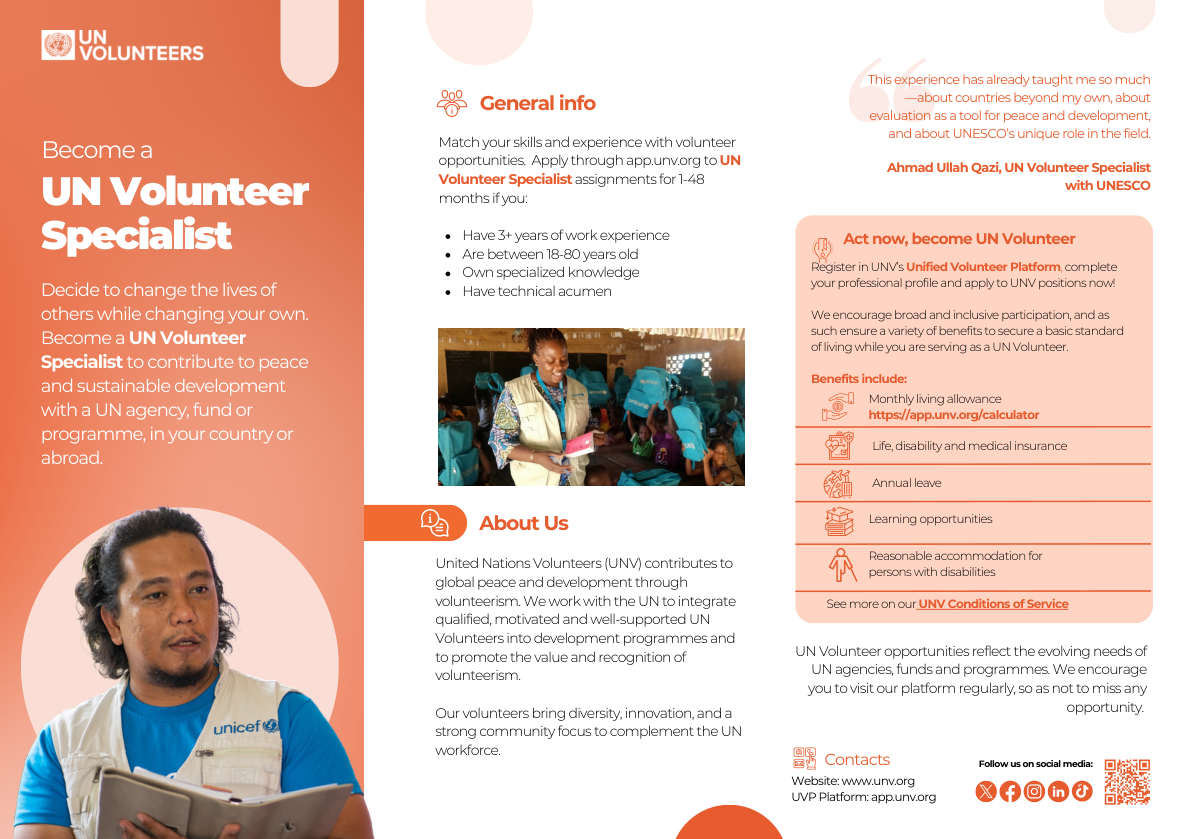
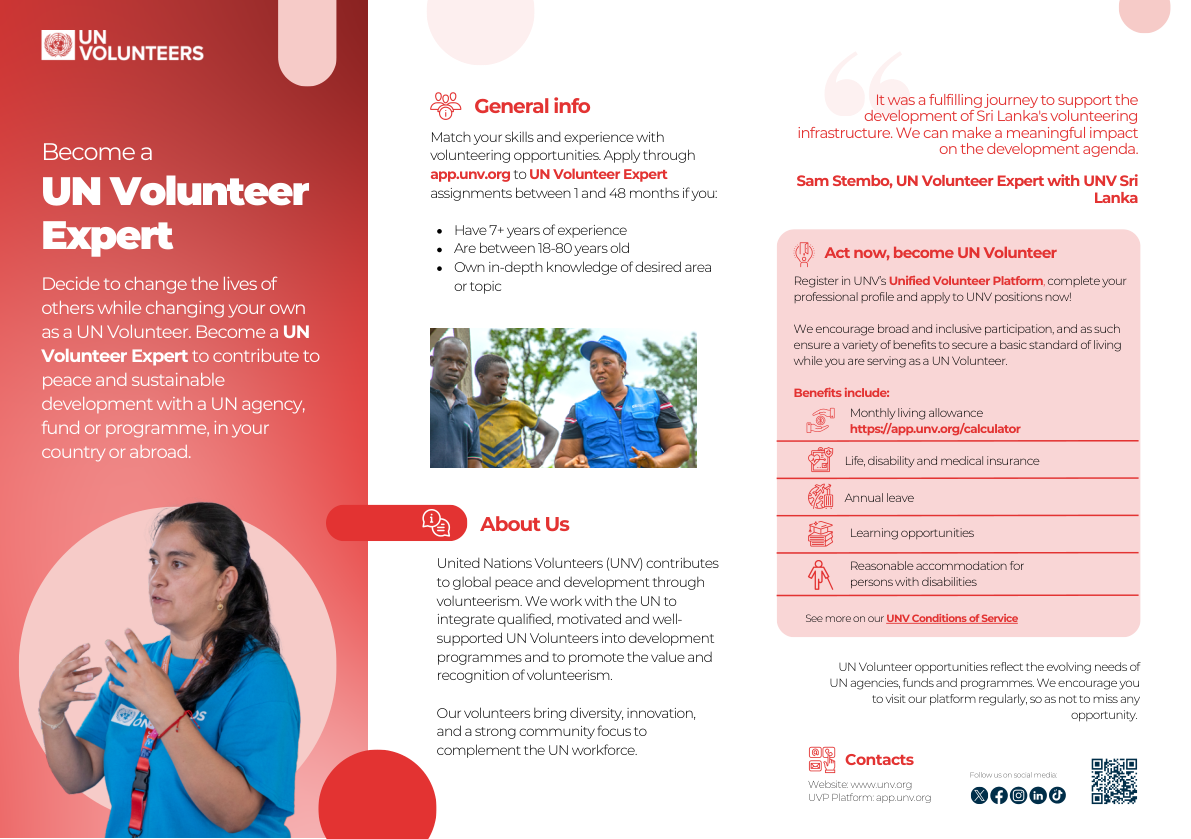
The category of the assignment is always indicated in the Description of Assignment.
Step 3: Assignment Arrangements
UN Volunteer assignments may differ in their working arrangements, which can influence the structure of the assignment and related entitlements. It is therefore important to consider these factors when applying for an assignment.
For each Description of Assignment in UVP, these arrangements are clearly indicated.
Work Schedule
| Arrangement | Description |
|---|---|
| Full-time (100%) | A full-time UN Volunteer assignment follows the standard working hours of the duty station. |
| Part-time (50%) | In a part-time arrangement, UN Volunteers typically work 50% of the official full-time working hours applicable to the duty station. Benefits and allowances are prorated accordingly. Part-time arrangements are only available for national UN Volunteer assignments. |
Duration
| Duration | Description |
|---|---|
| Short-term (1–3 months) | Assignments with a duration between one and three months are considered short-term. Due to their nature, the duration of the short-term assignments may have implications on benefits and allowances of each type and category. Short-term arrangements are available for all arrangements (i.e., full-time, part-time, remote and UN Office premises). |
| Long-term (4 months or longer) | Assignments lasting four months or more are considered long-term assignments and are therefore subject to long-term benefits and entitlements. |
Work Location
| Location | Description |
|---|---|
| On-site (UN office premises) | The UN Volunteer performs their duties at the UN office or duty station specified in the assignment. |
| Remote assignment | In remote arrangements, UN Volunteers perform their duties entirely from a location outside the UN office premises. The volunteer may serve from within or outside the duty station or even from another country, depending on the assignment and arrangements agreed upon. |
All UN Volunteer assignments are governed by the Conditions of Service for UN Volunteers, which outline the benefits and allowances applicable to each type of assignment.
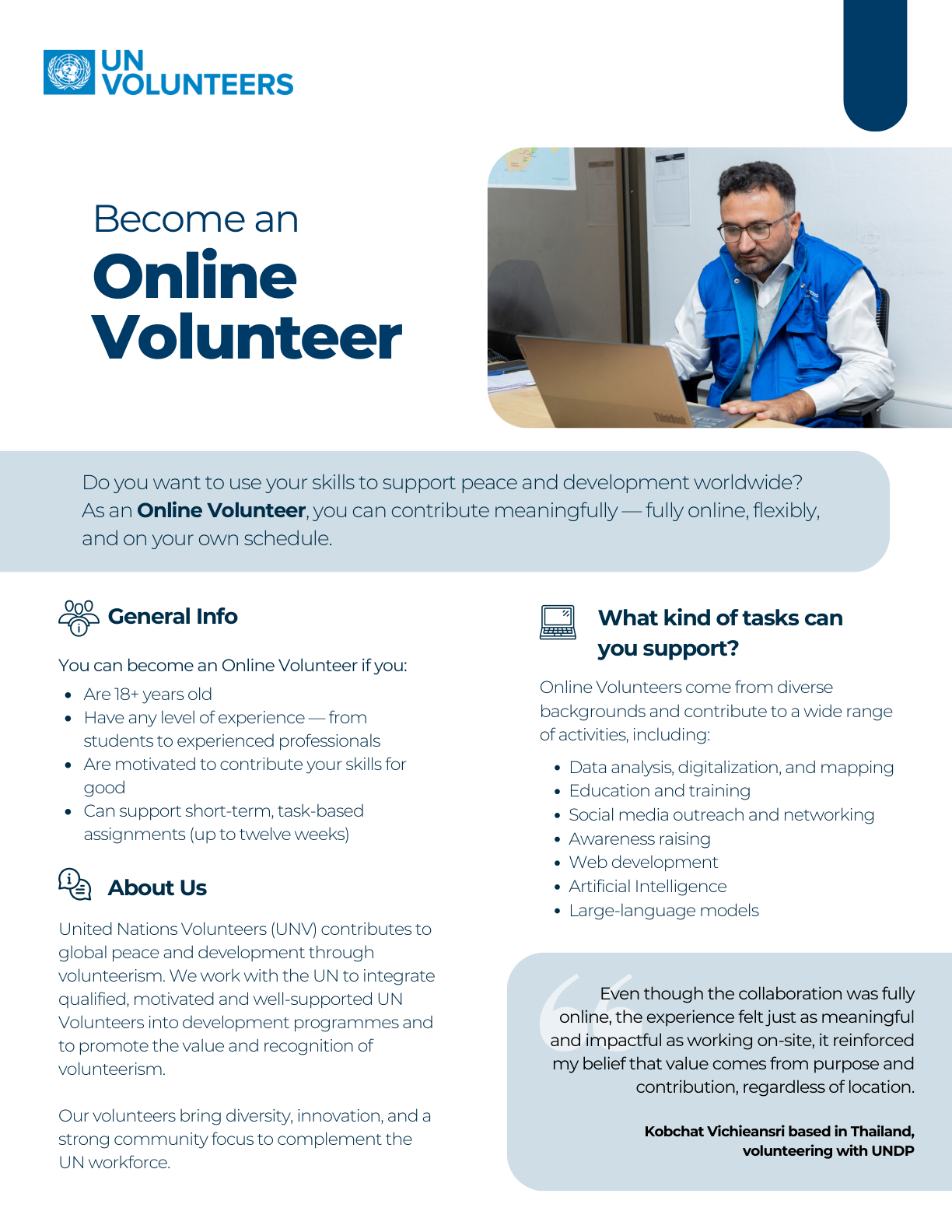
Online Volunteer Assignments
In addition to UN Volunteer assignments, there is the modality of Online Volunteering available. Online Volunteer assignments are time-bound (up to 12 weeks), task-based and non-contractual online assignments. While Online Volunteers are not entitled to benefits or allowances, they do receive a certificate of appreciation after successful completion. Watch this short video to understand better the difference between UN Volunteer and Online Volunteer opportunities:
Onsite or Online Volunteering
Which one fits you best?
Once you have found assignments that match your skills and interests, the next step is to submit your application through UVP.
To support you in preparing a strong application, explore the following resources:
Navigating UVP
How to find assignments, manage applications, and access key resources.
Creating a Strong Profile
How to build a compelling volunteer profile in UVP.
Ready? You are now prepared to explore and apply for UN Volunteer assignments on UVP. We look forward to receiving your application! Find out more about the selection process in the video below.
Understanding the Selection Process
What happens after you apply.
To give yourself the best chance of success, take some time to prepare your application materials and interview skills. The following videos will guide you through each step:
How to write a good CV — Part 1
How to write a good CV — Part 2
How to write effective motivation letters
How to best prepare for interviews
How to Prepare for a Competency Based Interview
Delivered by: Director of Human Resources of IOM
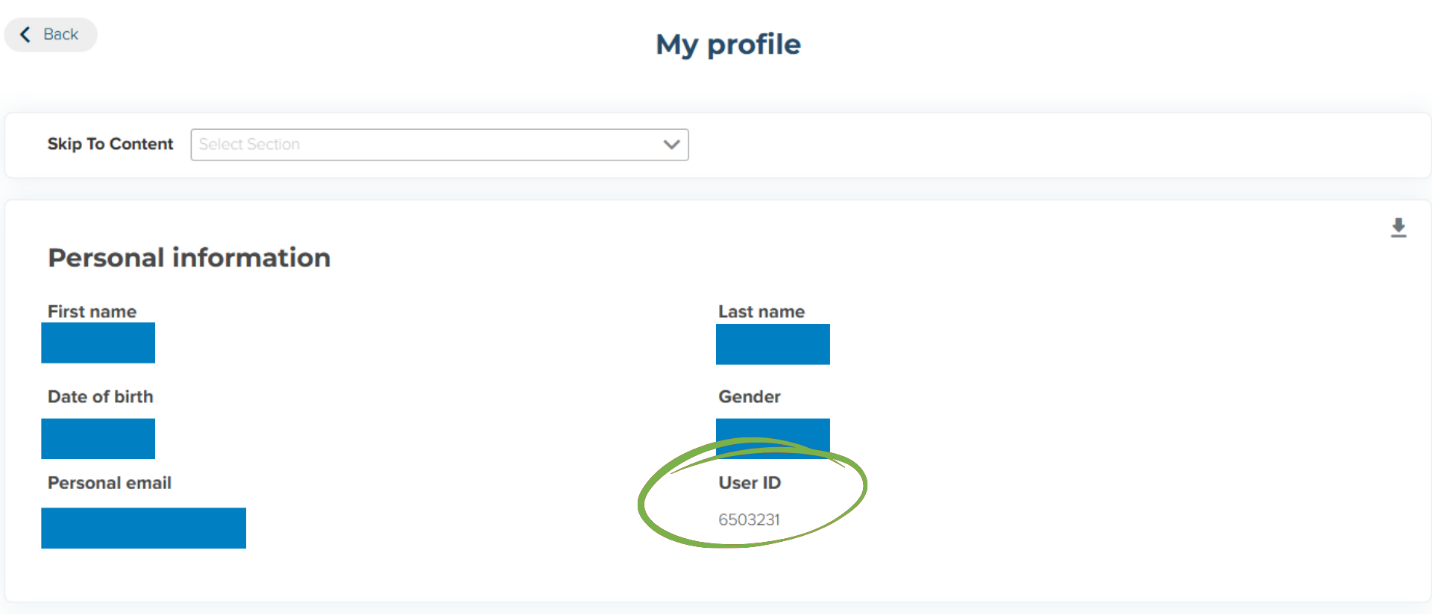
You have reviewed all the learning materials. To complete your pre-learning declaration, enter your UVP Roster ID and registered email below.
Where to find your UVP Roster ID: Log in to the Unified Volunteering Platform (UVP), go to your profile, and find your User ID under Personal Information.
Frequently Asked Questions
Do I need an eCampus account?
No. This page is publicly accessible. You can complete all learning materials and declare completion without an eCampus account. If you are later shortlisted for an assignment, your completion will be linked to your account automatically.
Why do I need to enter my UVP ID?
Your UVP ID allows us to match your pre-learning completion with your volunteer profile. When your eCampus account is created later, the system automatically applies your completion.
Is this page public? Is my data safe?
Yes, this page is publicly accessible so candidates without an eCampus account can use it. We only collect your UVP ID and registered email to link your completion. This data is stored securely within the eCampus platform.
What happens after I declare completion?
Your declaration is stored securely. If you are shortlisted and an eCampus account is created for you, your pre-learning completion is automatically applied to your profile — no action needed on your part.
Can I come back and redo this later?
Yes. You can return to this page at any time. If you submit a new declaration with the same UVP ID and email, your previous record is simply updated with the latest timestamp.
Need help?
If you need any support, please reach out to support@unv.org